Introduction
Most employees who witness workplace misconduct don't stay silent because they don't care. They stay silent because they've calculated the risk — and decided it's not worth it.
The numbers back this up. According to the EEOC's Select Task Force on Harassment, roughly three out of four people who experienced harassment never told a supervisor or manager about it. The most common reasons? Fear of disbelief, fear of inaction, and fear of retaliation.
That silence has a real cost. Small, fixable problems escalate into legal exposure, engagement crises, and public reputation damage on platforms like Glassdoor or Blind — all because no internal channel felt safe enough to use.
Anonymous incident reporting systems exist to break that cycle. This guide breaks down how these systems work, what makes them trustworthy, and how to build one employees will actually use.
Key Takeaways
- Anonymous reporting gives employees a protected channel to raise concerns — from safety hazards to harassment to culture problems — without risking their identity.
- Fear of retaliation is the primary driver of silence; anonymity removes that barrier structurally, not just by policy.
- These systems surface systemic patterns, not just individual complaints — enabling organizations to act before problems escalate.
- The best platforms combine built-in anonymity, mobile access, two-way communication, and analytics.
- A basic "report button" falls short; true anonymity, multiple channels, and ease of use are non-negotiable.
What Is an Anonymous Incident Reporting System?
An anonymous incident reporting system is a secure, structured channel that allows employees to submit concerns, observations, or feedback without revealing their identity. True anonymity is an architectural guarantee — meaning neither the employer nor the platform provider can technically trace a submission back to an individual, by design rather than by policy.
Anonymous vs. Confidential: An Important Distinction
These terms get used interchangeably, but they mean very different things:
- Confidential reporting: The reporter's identity is known to a specific administrator (often HR), but isn't shared broadly.
- Anonymous reporting: No one in the process — not HR, not management, not the platform itself — can identify who submitted the report.
For employees deciding whether to speak up, this distinction is everything. A confidential system still requires trust in a person. An anonymous system removes that requirement entirely.
Beyond the Suggestion Box
That architectural guarantee only matters if the system is easy enough to actually use. Modern anonymous reporting platforms have moved well past the traditional ethics hotline or paper suggestion box — today's systems are mobile-first, multi-channel, and built to capture:
- Safety incidents and near-misses
- Harassment and discrimination reports
- Ethics and compliance violations
- DEI concerns
- General workplace feedback and innovation ideas
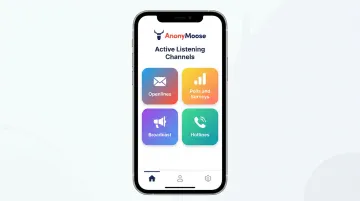
Platforms like AnonyMoose are built around this expanded scope, offering four active listening paths (Openlines, Polls & Surveys, Broadcast, and Hotlines) that replace fragmented channels like email, walk-ins, and town halls with a unified, always-on mobile solution. The organizational benefits of that shift compound quickly: Vantage Circle research found a 30% decrease in employee turnover among organizations that deployed anonymous feedback tools, as issues surface and get resolved before they become resignation decisions.
Why Anonymous Incident Reporting Matters More Than Ever
The Psychology of Silence
When employees don't feel psychologically safe, they suppress concerns rather than risk being seen as a troublemaker. Google's Project Aristotle, which studied 180 teams, identified psychological safety as the single most important factor in team effectiveness — teams with it were twice as likely to be rated effective by executives and less likely to leave.
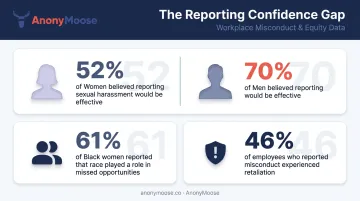
The problem is that most organizations haven't created that safety. According to the ECI's 2023 Global Business Ethics Survey summarized by NAVEX, 46% of employees who reported misconduct experienced retaliation. When nearly half of reporters face consequences, the rational choice is to stay quiet. Anonymous reporting systems directly address this calculation: research from the APA (2021) found that employees are 70% more likely to disclose unethical practices in anonymous settings compared to traditional feedback methods, illustrating how structural anonymity shifts the risk-reward equation enough to unlock the concerns organizations most need to hear.
The Business Case
Silence doesn't just create cultural problems — it creates financial ones. Gallup estimates that low employee engagement cost the global economy $10 trillion in lost productivity in 2025, and that 42% of voluntary turnover is preventable. Replacing a single employee can cost between 40% and 200% of their annual salary depending on their role.
What leaders don't hear is often more dangerous than what they do. When concerns go unvoiced internally, they eventually surface externally — through regulatory complaints, EEOC charges, or public reviews on Glassdoor and Blind. The EEOC consistently identifies retaliation as the most frequently alleged basis of discrimination in its enforcement data — a pattern that anonymous internal channels can help organizations get ahead of.
The DEI Dimension
The business and legal risks of silence hit hardest where reporting confidence is already lowest. McKinsey and LeanIn's 2024 Women in the Workplace report found that only 52% of women believed reporting sexual harassment would be effective, compared to 70% of men. Among Black women specifically, 61% said race played a role in missing out on opportunities.
Underrepresented employees face greater exposure to bias and harassment — and have less confidence that speaking up will help. An anonymous reporting channel won't eliminate that bias, but it does give employees a path to surface it without betting their job on whether leadership will respond fairly.
What Employees Can Report Anonymously
Modern anonymous reporting systems are designed for far more than formal complaints. The full range of reportable issues includes:
- Safety incidents — hazards, near-misses, unsafe conditions
- Harassment and bullying — including microaggressions
- Discrimination — based on race, gender, age, disability, or other protected characteristics
- Ethics and compliance violations — fraud, conflicts of interest, policy breaches
- Management misconduct
- DEI concerns — exclusion, bias, inequitable treatment
- Mental health and morale issues
- Operational problems — process inefficiencies, broken systems
- Positive feedback and innovation ideas — suggestions, improvements, recognition
Near-Miss Reporting: The Underused Opportunity
Near-miss reports deserve special attention. A near miss is an event that didn't cause harm — but could have. Research published in the Journal of Safety Research found that for every reported injury, there are typically 10 to 100 associated near-miss incidents. In one study of 167 near-miss reports, 37.7% had potential to cause permanent disability or fatality if an actual incident had occurred.
Anonymous systems increase near-miss reporting rates because employees no longer fear that flagging a close call will be perceived as negligence. Anonymous systems increase near-miss reporting rates because employees no longer fear that flagging a close call will be perceived as negligence. That same openness — the willingness to speak up without consequence — also raises a concern worth addressing directly: what stops employees from misusing it?
Addressing the Misuse Concern
False or malicious reports are a real concern, and reputable platforms build in structural safeguards against them. These typically include:
- Two-way anonymous follow-up — investigators can ask clarifying questions without revealing the reporter's identity
- Structured case management — reports go through defined review workflows, not straight to disciplinary action
- Clear terms of service — explicit prohibitions on bad-faith submissions
AnonyMoose's Hotlines feature, for example, keeps conversation threads open so receiving teams can gather documentation, attach files, and verify claims — all while the reporter stays anonymous. False and malicious reporting is explicitly prohibited under the platform's terms.
How Anonymous Incident Reporting Systems Work
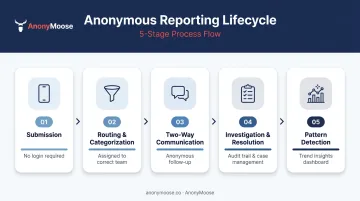
Most platforms follow a five-step process — from submission to pattern detection — that keeps the reporter protected at every stage.
Step 1 — Submission
An employee opens the platform (typically a mobile app), selects the relevant reporting channel, and submits their concern — no login, no personal details required. Strong systems avoid collecting metadata that might expose the reporter.
In AnonyMoose's case, employees access Hotlines directly through the mobile app and can submit from their desk, a warehouse floor, or a construction site the moment an incident occurs. There's no need to find a private phone or walk into an HR office.
Step 2 — Routing and Categorization
Reports are routed to the appropriate team based on the channel selected. In AnonyMoose's model, organizations configure their own custom directory of Hotlines — each dedicated to a specific incident type (harassment, discrimination, compliance violations) and assigned to a designated person or team in HR, legal, or leadership. The reporter's identity remains protected throughout.
Step 3 — Two-Way Anonymous Communication
This is where modern systems differ from old-school hotlines. Investigators can ask follow-up questions; the reporter can respond. Neither party knows who the other is. Both can attach documents, images, screenshots, or location data.
In AnonyMoose, these conversations are persistent threads that stay open well beyond the initial submission, giving investigators the context they need without ever exposing the reporter.
Step 4 — Investigation and Resolution
Reports are managed as structured cases with full audit support. Each case includes:
- Urgency levels to prioritize response
- Status updates and internal notes visible to the investigation team
- Timestamped activity history documenting what happened and when
This audit trail is essential for both accountability and legal defensibility.
Step 5 — Pattern Detection
Aggregated, de-identified data across reports reveals trends invisible to individual case review: repeated concerns from one team, a spike in reports after a policy change, themes that point to systemic problems. AnonyMoose's Insights Dashboard uses AI to analyze patterns across Hotline reports, identifying collective themes without ever accessing individual identities. Organizations can spot a department-wide issue weeks before it escalates — rather than learning about it through a formal complaint or an exit interview.
Key Features to Look For in an Anonymous Reporting Platform
Choosing the wrong platform doesn't just waste budget — it exposes reporters to risk. Before committing, verify these five capabilities:
| Feature | What to Verify |
|---|---|
| Architecture-level anonymity | Can the platform technically identify reporters, or does it just promise not to? |
| Multiple reporting channels | Web, mobile, polls, hotlines — or just a single form? |
| Mobile-first accessibility | Accessible to deskless and frontline workers without a laptop? |
| Two-way anonymous communication | Can investigators follow up without breaking anonymity? |
| Analytics and trend reporting | Pattern detection, not just a ticket list |
Architecture-Level Anonymity: The Non-Negotiable
Some platforms collect user data and promise not to share it. That's a policy, not protection. True anonymity means there's no technical mechanism that could expose a reporter's identity — not to the employer, not to the platform itself.
The distinction matters in practice. As AnonyMoose describes its own architecture: "The employee's identity is never revealed — not by trust or policy, but by design. There is no technical mechanism within the platform that can expose who sent a message."
Multiple Channels for a Diverse Workforce
A single web form misses most employees. Look for platforms that offer multiple access points. AnonyMoose's four active listening paths illustrate what comprehensive coverage looks like:
- Openlines for ongoing, two-way anonymous dialogue between employees and managers — not just one-time submissions
- Polls & Surveys to run anonymous pulse checks on specific teams or subgroups
- Broadcast so leadership can push announcements directly to employees via mobile notifications
- Hotlines for structured, anonymous reporting of sensitive incidents and ethics concerns
Together, these channels replace the patchwork of email threads, walk-ins, town halls, and phone lines that most organizations still rely on — consolidating everything into one mobile platform employees can access on their own terms.
Best Practices for a Successful Anonymous Reporting Program
Build Trust Before You Build the System
No platform works without cultural foundation. Before launch, communicate clearly:
- How the system works and what protections exist
- What happens after a report is submitted
- What employees can and cannot expect in terms of follow-up
Silence from leadership after reports are submitted is the fastest way to kill participation.
Make It Visible and Normal
Embed awareness into onboarding, manager training, ongoing internal communications, and team meetings. Frame the tool as a way for every voice to be heard — not as a surveillance mechanism. AnonyMoose, for example, delivers a mobile app employees can open from any device, with no IT setup or hardware required on their end.
Close the Loop Without Breaking Anonymity
Share aggregate outcomes with the organization: "We heard concerns about X, and here's what changed." This feedback loop proves that reports lead to action — which drives continued participation. Individual submissions stay confidential; what you share is the pattern and the response — enough to show the system works.
Common Pitfalls to Avoid
Even well-intentioned reporting systems fail when implementation misses these basics:
- No enforced non-retaliation policy. A reporting channel paired with visible retaliation confirms employees' worst fears. Pair the system with a zero-tolerance policy, and make enforcement visible — not just documented.
- Unacknowledged reports. Even an automated confirmation that a report was received matters. Reporters who hear nothing assume nothing happened and stop submitting. Close cases with resolution notes and share outcomes (such as resolved case counts) in all-hands updates.
- Overly complex submission process. If reporting requires lengthy forms, multiple logins, or unclear instructions, employees won't bother. The path to submission should take under two minutes.
- No designated owner for follow-up. Reports that land in a shared inbox and sit unassigned stall out fast. Assign clear ownership — whether HR, legal, or a dedicated ethics team — before launch.
- Treating the system as set-and-forget. Utilization drops when employees don't see the channel promoted, updated, or referenced by leadership. Regular reminders that the channel exists and is actively monitored keep participation steady.
Frequently Asked Questions
Should incident reports be anonymous?
Anonymity significantly increases reporting rates by removing fear of retaliation. For categories like harassment, discrimination, and ethics violations, many employees simply won't report without it. Well-designed systems like AnonyMoose default to full anonymity by design, ensuring neither the platform nor the employer can identify the reporter.
Which tool is used for reporting anonymously?
Purpose-built platforms like AnonyMoose ensure neither the employer nor the platform can identify reporters. Generic survey tools and email-based systems cannot guarantee this at the architectural level.
What can you anonymously report someone for?
Employees can report across a wide range of topics, including:
- Workplace harassment or discrimination
- Safety hazards and near-misses
- Ethics or compliance violations
- Management misconduct and DEI concerns
- Positive feedback and innovation ideas
Modern systems like AnonyMoose support proactive communication, not just formal complaints.
What is the difference between anonymous and confidential reporting?
Confidential reporting means the reporter's identity is known to a specific administrator but not shared broadly. Anonymous reporting means no one (not HR, not management, not the platform) can identify who submitted. True anonymity requires architectural protections, not just a privacy promise.
How do anonymous reporting systems protect employee identity?
Strong systems avoid linking submissions to any individual identity by design, not just policy. AnonyMoose, for example, stores submissions without any technical mechanism that could identify the author, and all data is encrypted at all times on AWS cloud infrastructure.
How can organizations encourage employees to actually use anonymous reporting systems?
Communicate consistently about how the system works and what protections exist. Share aggregate outcomes to show reports lead to real changes. Ensure leadership visibly champions the tool — employees adopt systems they believe in, and that belief builds when leaders demonstrate accountability.