The missing piece is rarely more policy. It's psychological safety — the belief that one can speak up, be authentic, and take risks without fear of punishment or judgment.
This post covers how psychological safety and DEI are interdependent (not interchangeable), how Timothy Clark's four-stage framework maps directly onto DEI outcomes, the business case for inclusive workplaces, and practical strategies organizations can act on now.
Key Takeaways
- Diversity without psychological safety produces representation on paper, not inclusion in reality
- Clark's four stages — inclusion, learning, contribution, and challenge — map directly to where underrepresented employees most often disengage
- Top-quartile diverse companies are 39% more likely to outperform peers financially (McKinsey, 2023)
- Leaders set the behavioral tone that either builds or erodes psychological safety across teams
- Anonymous communication channels let underrepresented employees speak up without fear of retaliation
Psychological Safety and DEI: Two Sides of the Same Coin
What Each Term Actually Means
In 1999, Harvard Business School researcher Amy Edmondson defined team psychological safety as "a shared belief held by members of a team that the team is safe for interpersonal risk-taking." It's not about comfort or conflict avoidance — it's about whether people believe they can raise problems, admit mistakes, or challenge ideas without being penalized.
DEI goes further. SHRM defines inclusion as creating structures where every employee, regardless of role or background, can contribute, be heard, and succeed. True DEI isn't a headcount metric. It's about whether the conditions exist for every person to participate fully and authentically.
Why Neither Works Without the Other
This is where most organizations get stuck. You can hire for diversity and still build an environment where underrepresented employees self-censor, code-switch, or disengage. Bresman and Edmondson's 2022 pharmaceutical-team research confirmed this directly: team diversity was negatively associated with performance overall, but positively associated with performance when psychological safety was high.
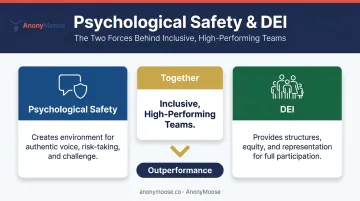
Psychological safety is the cultural foundation that DEI initiatives need to take root. The two are not competing priorities:
- Psychological safety creates the environment where people feel safe to speak, challenge, and be themselves
- DEI ensures the structures, equity, and representation are in place for every person to participate fully
- Together, they produce the conditions where diverse teams actually outperform
Neither is sufficient alone. Organizations that invest in one while neglecting the other consistently fall short.
The Starting Point: Inclusion Safety
Before employees can contribute or challenge anything, they need to feel accepted for who they are. Timothy Clark calls this "Inclusion Safety" — his first stage — and it's the clearest point where psychological safety and DEI intersect.
Without it, underrepresented employees are forced to mask identities, adjust behavior, and expend cognitive energy on self-protection rather than contribution.
Indeed's 2024 survey found 34% of Black employees had code-switched at work, compared to 20% of all respondents — with 23% reporting negative mental health impact. Code-switching isn't a personal preference. It's a rational response to an environment where inclusion safety doesn't yet exist.
The Four Stages of Psychological Safety and Their DEI Implications
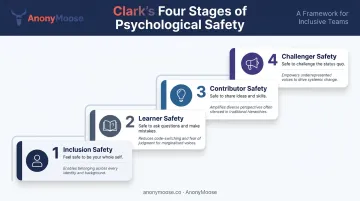
Timothy Clark's framework, outlined in The 4 Stages of Psychological Safety (2020), provides a practical lens for understanding where DEI efforts succeed or stall.
Stage 1 — Inclusion Safety
Employees feel safe to be their whole selves — race, ethnicity, gender identity, background — without fear of judgment or exclusion. Strong DEI practices are non-negotiable at this stage. Without them, employees default to masking, which costs them cognitive resources and costs organizations authentic input.
Stage 2 — Learner Safety
Employees feel safe to ask questions, make mistakes, and experiment.
This stage carries an equity dimension that's easy to overlook: learning safety without equity disproportionately benefits those who already feel culturally "safe." When the dominant group sets the norms for what questions are acceptable — or what mistakes are forgivable — access to learning becomes uneven across the team.
Stage 3 — Contributor Safety
Employees feel confident sharing ideas and skills. But even in teams where contributor safety formally exists, invisible barriers persist.
Detert and Edmondson identified "implicit voice theories" — unstated assumptions that speaking up to higher-status individuals is inherently risky — as a key mechanism of self-censorship. Removing those barriers requires active attention to implicit bias and exclusionary norms, not just open-door policies.
Stage 4 — Challenger Safety
Employees can challenge the status quo without fear of retaliation. This is where psychological safety and DEI generate their greatest combined organizational value. It's also where the absence of either does the most damage.
Challenger safety is precisely the stage where diverse perspectives drive innovation. Silencing challenge silences exactly the voices most likely to surface blind spots, question assumptions, and generate novel solutions. When challenger safety fails, organizations don't just lose dissent — they lose the early warnings and fresh thinking that come with it.
Why Inclusive Workplaces Outperform: The Business Case
The performance argument for psychological safety and DEI is no longer speculative.
Financial Outperformance
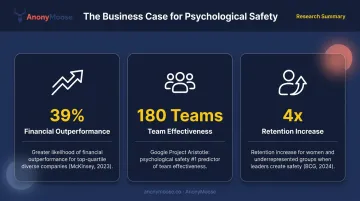
McKinsey's 2023 Diversity Matters Even More report found that top-quartile companies for executive-team gender diversity had a 39% greater likelihood of financial outperformance versus bottom-quartile peers — a figure that held equally for ethnic diversity.
Team Performance
Google's Project Aristotle, which analyzed more than 180 teams, identified psychological safety as the single most important predictor of team effectiveness — ranking above dependability, structure, meaning, and impact. When safety is absent, teams under-report problems, avoid difficult conversations, and leave innovation on the table.
Retention and Engagement
BCG reported in 2024 that when leaders create psychological safety, retention increases by more than four times for women and some underrepresented employee groups. Research from Quantum Workplace found a 35% increase in employees' sense of belonging through anonymous communication in organizations — and the APA found a 30% increase in belonging for employees in workplaces that prioritize genuine listening. Together, these findings make anonymous communication channels one of the most direct structural investments in DEI outcomes available to HR leaders. The compounding benefits extend further:
- Higher employee engagement and discretionary effort
- Stronger employer brand attracting diverse candidates
- Reduced risk of external whistleblowing and negative public reviews
- Earlier surfacing of team dysfunction and manager misconduct
Organizations that ignore these dynamics don't just miss performance gains. They lose the candid input that prevents costly problems from going unaddressed.
How to Build Psychological Safety That Advances DEI
Building psychological safety for DEI isn't a one-time training initiative. It requires structural changes, sustained leadership behavior shifts, and listening systems that keep working over time.
Model Inclusive Leadership from the Top Down
Psychological safety starts with senior leaders, because leaders set the behavioral reference point for everyone else. Nembhard and Edmondson's 2006 research established that leader inclusiveness — words and deeds that invite and appreciate others' contributions — directly shaped psychological safety and improvement efforts, particularly for lower-status team members.
Leaders can build safety by:
- Responding to employee concerns without dismissiveness or defensiveness
- Acknowledging mistakes and limitations openly, rather than projecting certainty
- Actively soliciting dissenting input, especially from those who tend to stay quiet
- Using multi-rater assessments (Deloitte's inclusive leadership research used 180-degree measures) to understand how others actually experience your leadership style
DEI-aware leadership means going one step further: reflecting on whose voices are absent, not just responding to whoever speaks up. Proactively seeking out underrepresented perspectives isn't optional — it's where inclusion safety is either built or abandoned.
Create Equitable, Anonymous Channels for Employee Voice
One of the most significant structural barriers to psychological safety for underrepresented employees is fear of retaliation — particularly when raising concerns about bias, discrimination, or inequity. Traditional channels like town halls and one-on-ones disproportionately benefit those who already feel safe speaking up.
Research shows that 82% of employees are more likely to share critical feedback when anonymity is preserved (SHRM Study, 2020), and anonymous surveys achieve 90% participation versus 30% for identified surveys, according to buildempire.co.uk. Organizations using these channels also see a 47% increase in actionable feedback related to management practices (SHRM Study, 2020) — the exact dimension where underrepresented employees are most likely to self-censor in identified formats.
That gap isn't a preference difference. It's the voice of every employee who has something to say but doesn't feel safe saying it with their name attached.
Anonymous communication platforms address this at the structural level — not through policy promises, but through technical design. AnonyMoose is built so that submissions cannot be traced back to individual employees by HR administrators or the platform itself. The anonymity is enforced by the architecture, not dependent on good intentions.
The platform's four active listening paths each serve a distinct function for DEI and psychological safety:
- Openlines — Two-way anonymous channels between employees and specific leaders or departments, replacing town halls and open-door policies without the visibility risk
- Polls & Surveys — Target across up to five custom criteria (demographic, role, and more) to identify whether psychological safety is equitably distributed across workforce segments
- Hotlines — Separate incident reporting channels for discrimination, bias, harassment, and microaggressions — kept structurally distinct from general feedback
- Broadcast — Instant leadership messaging to every employee's phone, enabling rapid, visible responses that show speaking up produces action
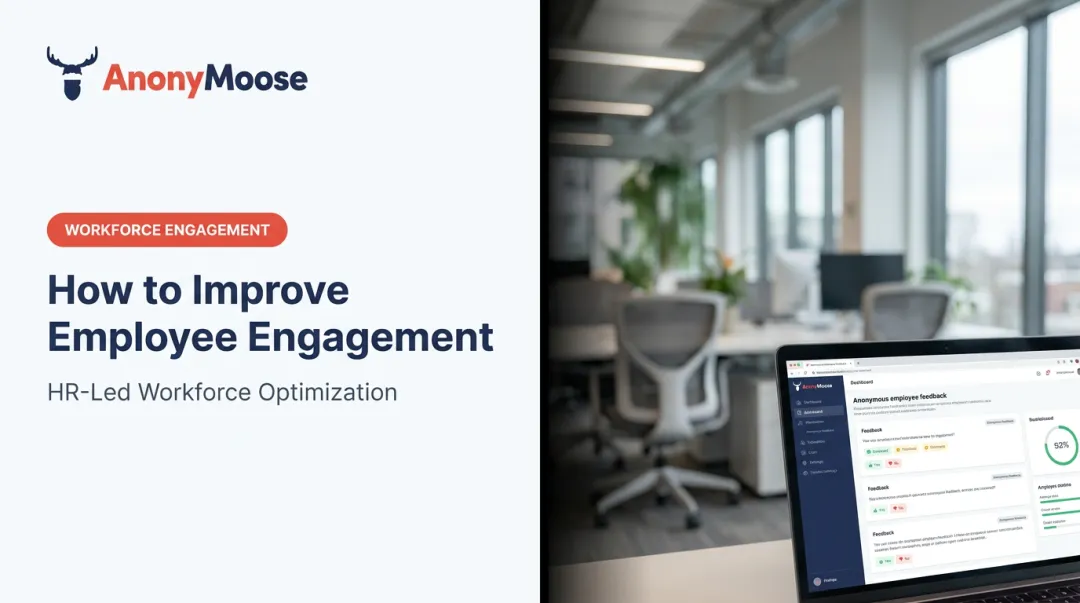
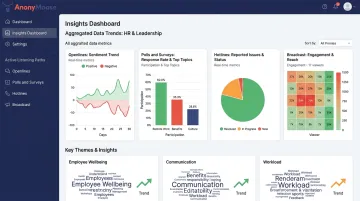
The Insights Dashboard surfaces aggregated trends and patterns across all channels, giving HR and senior leadership the data needed to identify DEI gaps — without compromising individual anonymity.
Overcoming Common Barriers to Psychological Safety and DEI
Resistance to Change
Dobbin and Kalev's research found that mandatory diversity programs often trigger resistance precisely because people react negatively to coercive controls. The stronger approach combines accountability with engagement — creating conditions where leaders want to build inclusive cultures, not just comply with requirements.
Unlearning old norms takes as much effort as learning new ones. To move past resistance, leaders need to:
- Sit with discomfort rather than deflect criticism of existing culture
- Sustain commitment well beyond the initial rollout
Surface-Level Compliance
Organizations that treat DEI as a checkbox and psychological safety as a soft HR metric will see initiatives stall quickly. The warning signs include:
- Training programs without structural follow-through
- Engagement surveys with no demographic breakdowns
- DEI dashboards that measure representation but not belonging or contribution
Moving from compliance to culture means examining engagement across race, gender, tenure, and role level — not just aggregate scores that mask who's actually being left out.
Complacency After Early Wins
Psychological safety and inclusion erode without active maintenance. Organizations that see early progress in survey scores or retention metrics often reduce measurement frequency — and miss the slow slide that follows.
Build ongoing measurement habits:
- Regular anonymous pulse surveys using validated frameworks (such as Edmondson's 7-item psychological safety scale)
- Engagement data segmented by demographic attributes to reveal whether safety is equitably distributed
- Periodic DEI audits that examine not just who is present, but who is contributing, advancing, and staying
When early numbers look good, that's precisely when consistent measurement matters most — momentum stalls fastest when organizations stop paying attention.
Frequently Asked Questions
What is the role of psychological safety in diversity and inclusion?
Psychological safety is the cultural foundation DEI depends on. Without it, diverse employees are recruited into environments where they still can't speak freely, contribute authentically, or challenge inequity — keeping DEI outcomes surface-level no matter what representation metrics show.
What are the 5 C's of psychological safety?
The 5 C's framework (typically: Clarity, Candor, Curiosity, Commitment, and Consistency) describes conditions that support safe engagement at work. It originates in practitioner literature, not peer-reviewed research. For evidence-based measurement, Edmondson's 7-item team psychological safety scale remains the validated standard.
Does DEI protect mental health?
Inclusive workplaces reduce chronic stress tied to identity concealment, microaggressions, and exclusion. Research links psychological safety and belonging to lower burnout and improved mental health outcomes, particularly for employees from historically marginalized groups.
Can you have DEI without psychological safety?
Organizations can achieve demographic diversity without psychological safety, but real inclusion and equity will remain out of reach. Employees may be physically present but unwilling to contribute authentically , which limits the performance and innovation benefits diversity is meant to deliver.
How do leaders measure psychological safety in a DEI context?
The most effective approach combines Edmondson's 7-item scale (via anonymous pulse surveys), engagement data segmented by demographic group, and qualitative listening channels. Demographic breakdowns reveal whether psychological safety is equitably distributed across your workforce.